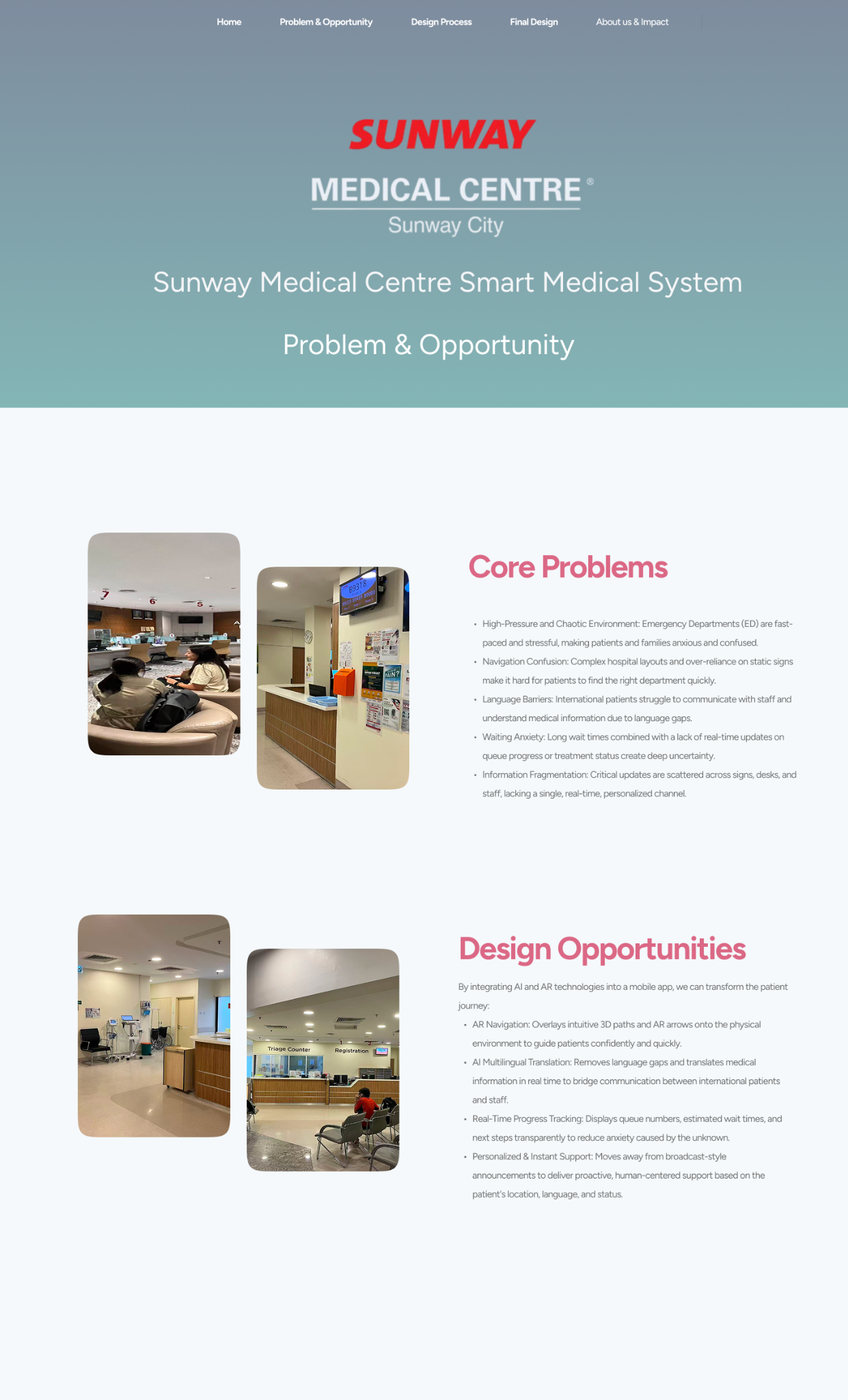
Core Problems
A high-pressure environment, complex circulation, static signage, and limited personalised updates make patients and families feel uncertain and out of control.
A human-centred emergency care experience powered by multilingual AI, live queue updates, and AR indoor navigation.
Field observation revealed four critical issues in emergency care: navigation confusion, language barriers, waiting anxiety, and fragmented information.
A high-pressure environment, complex circulation, static signage, and limited personalised updates make patients and families feel uncertain and out of control.
The opportunity is to combine AR wayfinding, multilingual AI translation, real-time progress tracking, and context-aware support in one mobile experience.
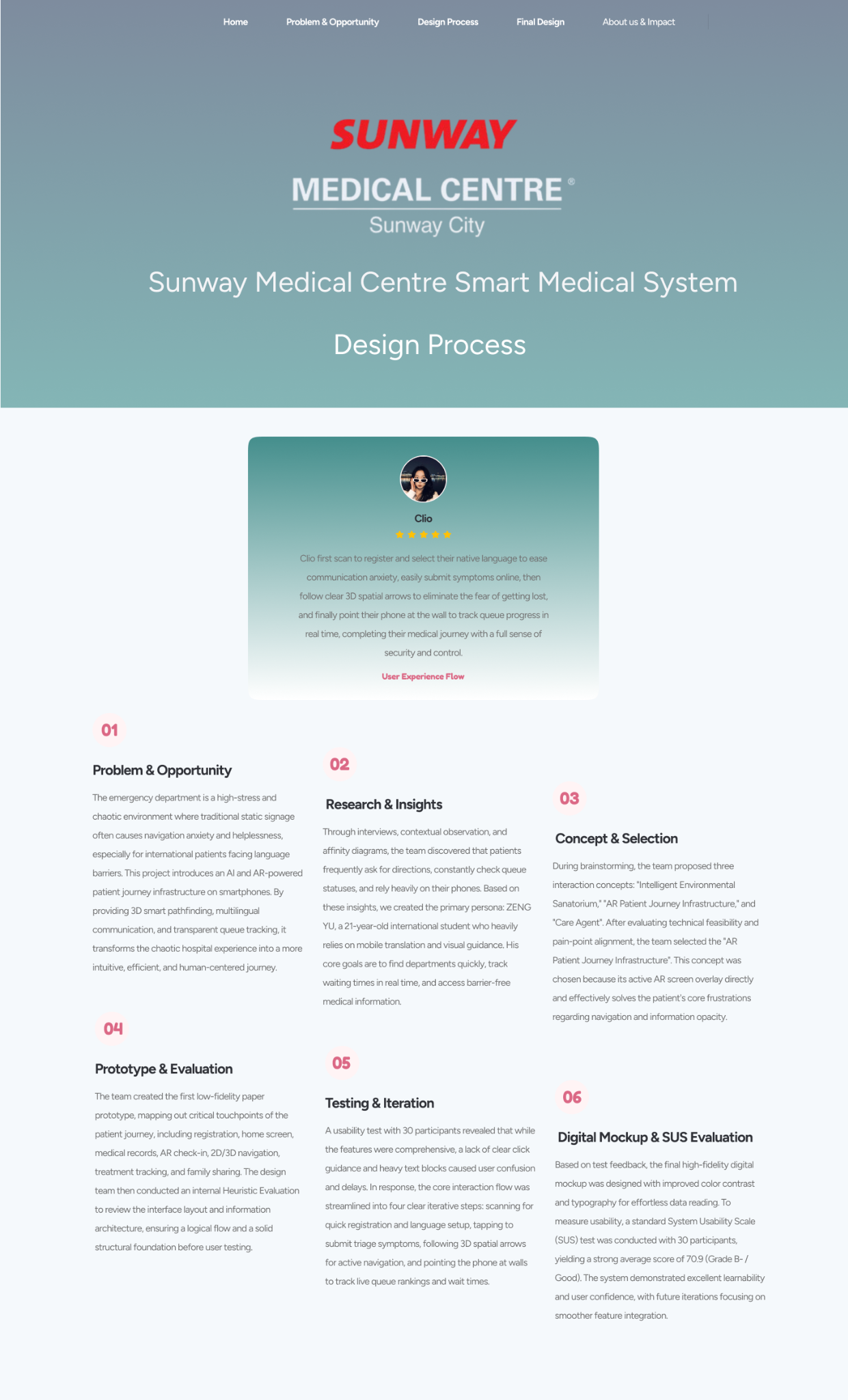
The process moves from problem framing and research insights to concept selection, prototyping, usability testing, and SUS evaluation.
We observed how patients searched for departments, checked queue status, and requested language support in a real emergency-care setting.
The primary persona is an international patient who depends on mobile translation and visual guidance, with priority placed on orientation, transparency, and communication confidence.
Usability testing showed that clearer step guidance, lower text density, and stronger visual hierarchy significantly reduced hesitation.
The final concept achieved a good usability score and created a strong foundation for future feature integration and hospital deployment.
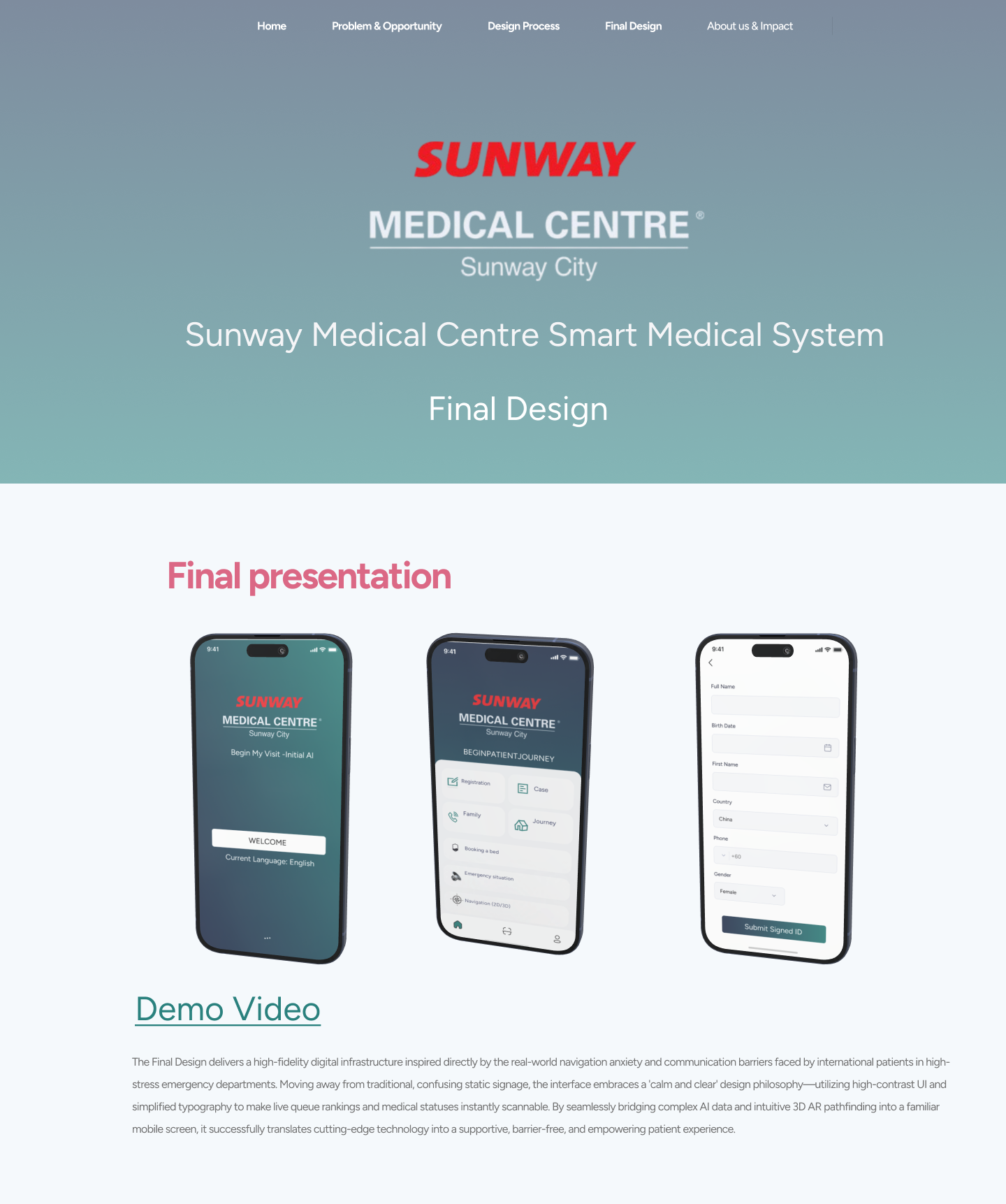
The high-fidelity system uses a calm visual language and brings registration, medical records, family sharing, navigation, and treatment progress into one interface.
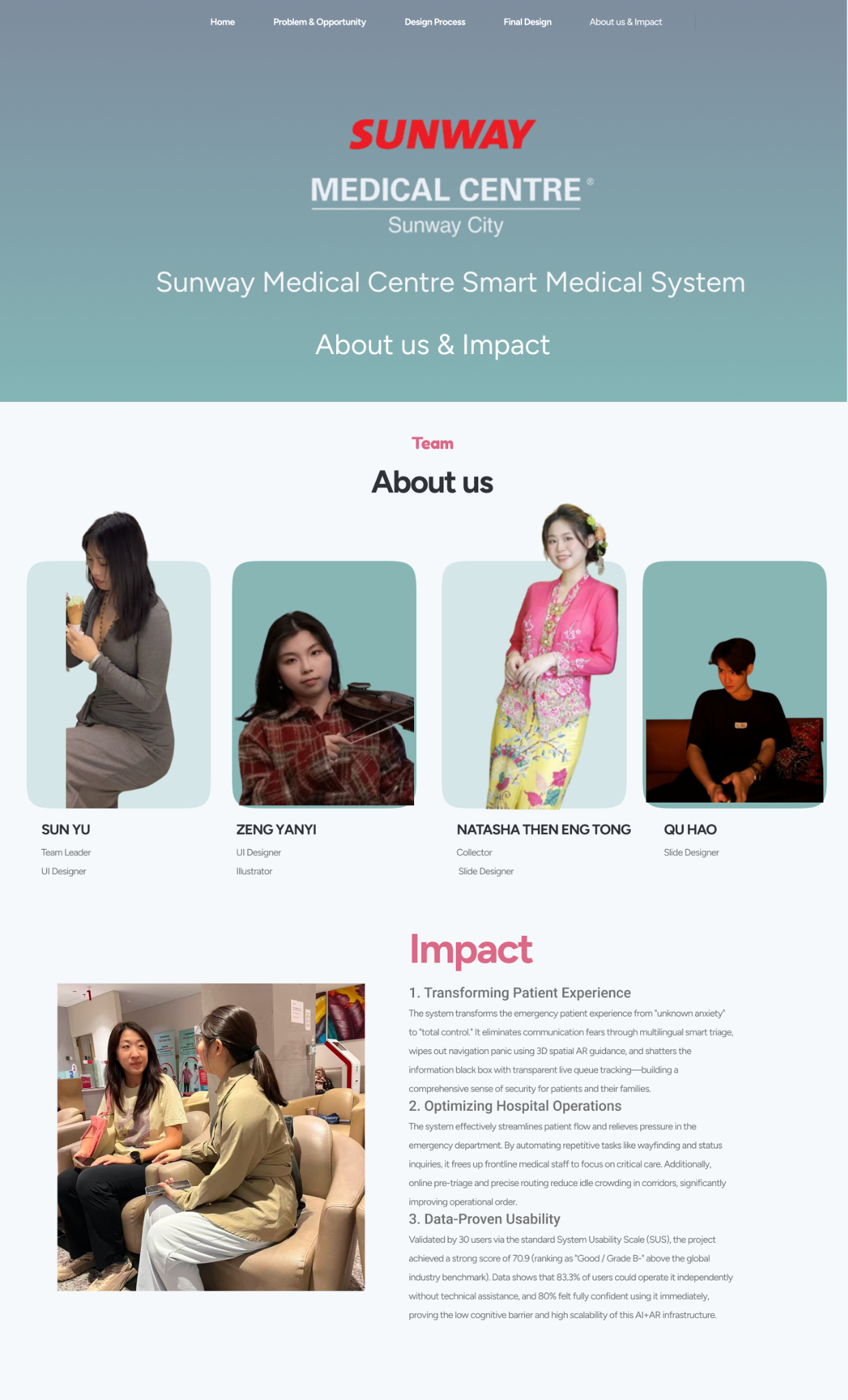
The project connects patient experience, hospital efficiency, and measurable usability outcomes so that advanced technology supports the care journey in a practical way.